Spatializing Sound
Acoustically-driven parametric form-finding for performance spaces.
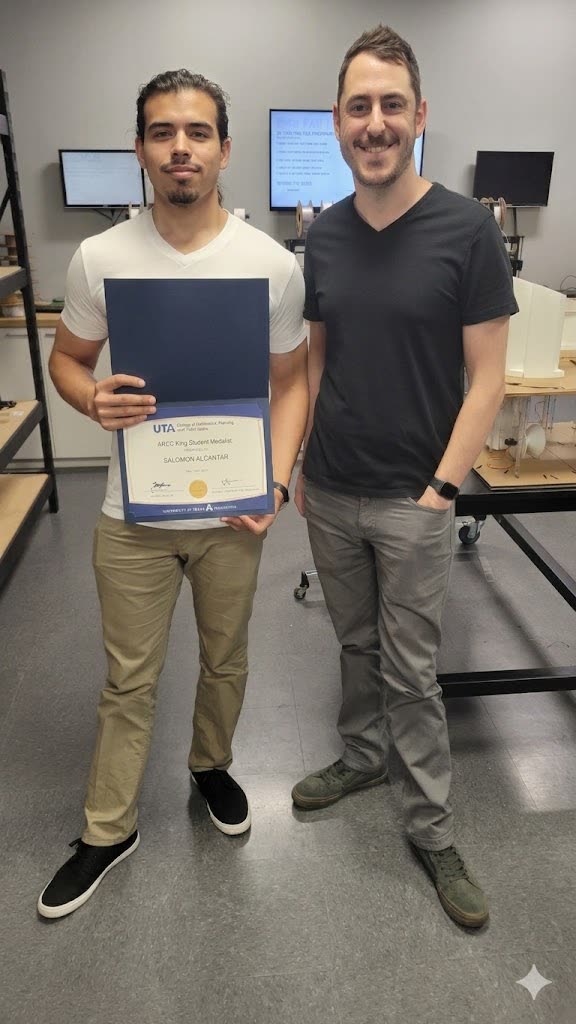
AARC Research Medal
A two-semester independent study (Spring 2023 and Spring 2024) carried out under the guidance of Prof. Cord Read. Together, the two studies were recognized at graduation with the AARC Research Medal from the UT Arlington College of Architecture, Planning & Public Affairs. The award was given to a single student across the undergraduate and graduate cohorts.
Designing with sound, not around it.
This study developed a parametric workflow that integrates acoustic performance into the earliest stages of architectural design. Rather than treating acoustics as a corrective layer applied after form is set, the project asks what happens when sound reflection becomes a generator of geometry from the start.
Working in Rhinoceros and Grasshopper, the work produced a real-time tool that shapes reflective surfaces between a sound source and a defined audience region. Geometry updates live as design parameters are adjusted, allowing the architect to explore concert and recital hall configurations as an active dialogue between spatial intent and acoustic behavior.
The semester was structured in three phases: acoustic and scripting research, tool development, and applied testing on speculative concert hall geometries.
Encoding acoustics as geometry.
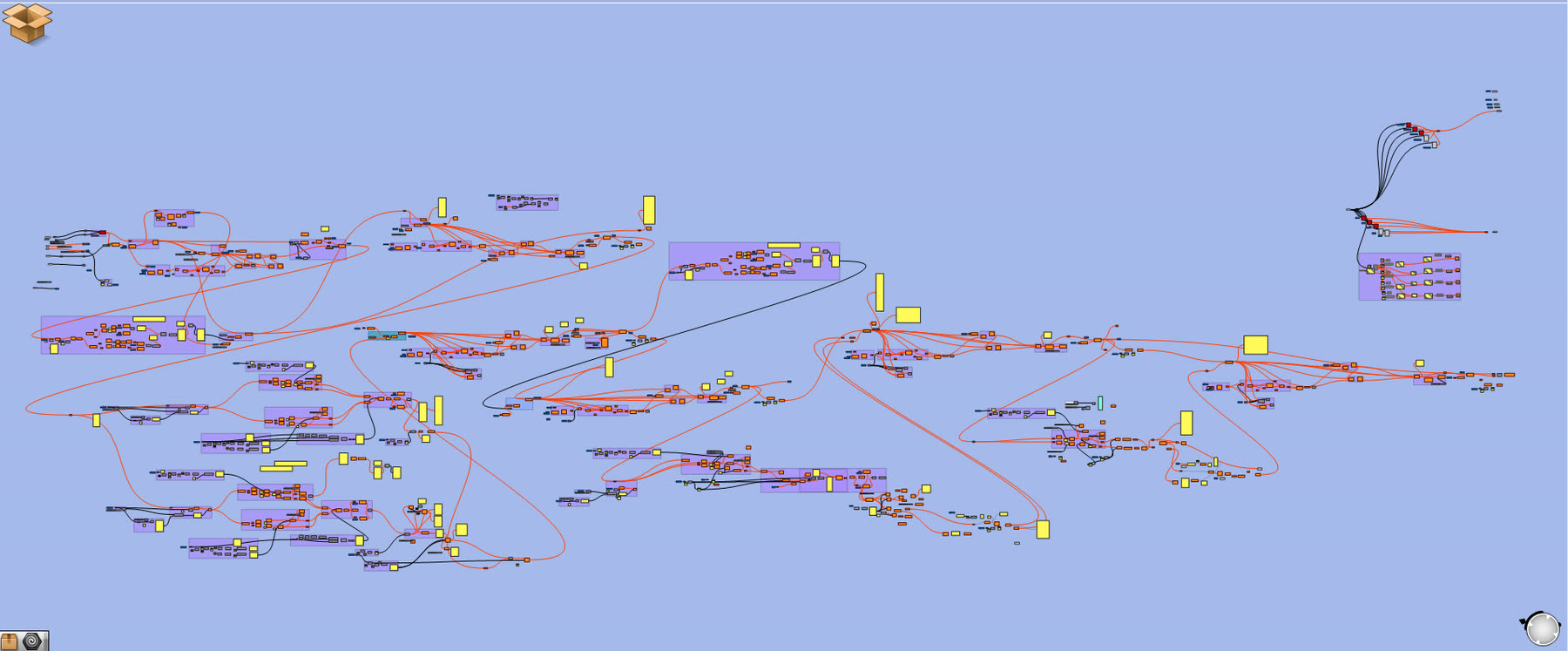
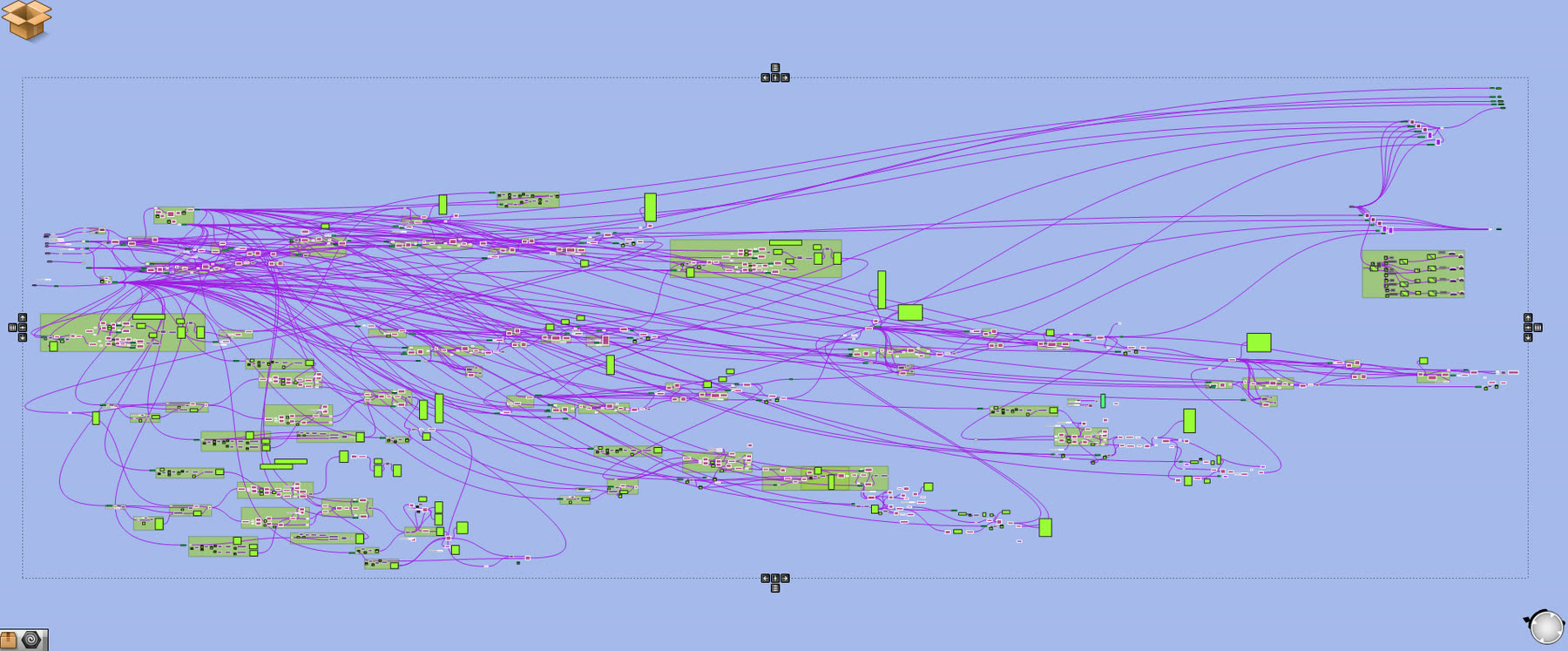
The Grasshopper definition distills the core logic. Source and target surface inputs feed the math that derives reflection vectors, which drive panel positioning and the surface normals behind the final reflecting geometry. Panel count, panel size, source position, and the reflecting and target surfaces are all exposed as live parameters.
Packaging it as a usable design tool.
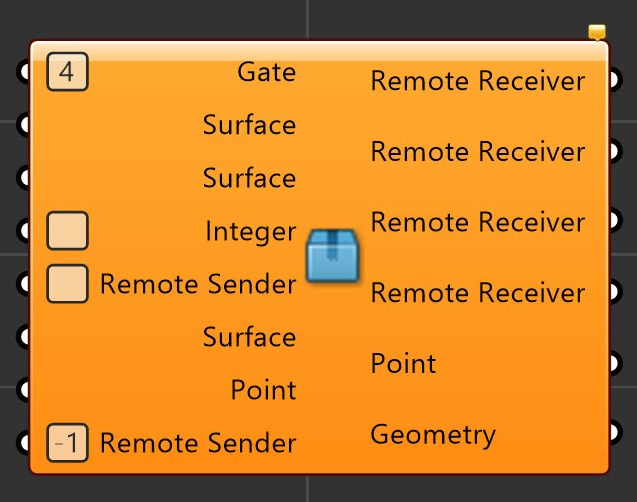
For the script to function as a real design instrument and not just a research artifact, the entire definition was wrapped into a single Grasshopper cluster. The result is a clean component, with named inputs and outputs on either side, that another designer can drop into their own definition without ever opening the underlying math.
From a single panel to a finished space.
Development proceeded through escalating stages of complexity. Each stage solved a specific geometric problem and produced a working component that fed the next. The videos below document the tool running live in Rhino. Sound is removed; two videos that were originally several minutes long are sped up for clarity.
The math primitive.
The first script computes the orientation of a single planar panel that reflects sound from a defined source to a defined target point. The angle of the panel is derived from the angle bisector between the incoming and outgoing rays. There is no animation to show here. It is a geometric primitive: one panel, one source, one target. Everything that follows is a generalization of this single move.
Visualizing the acoustic geometry.
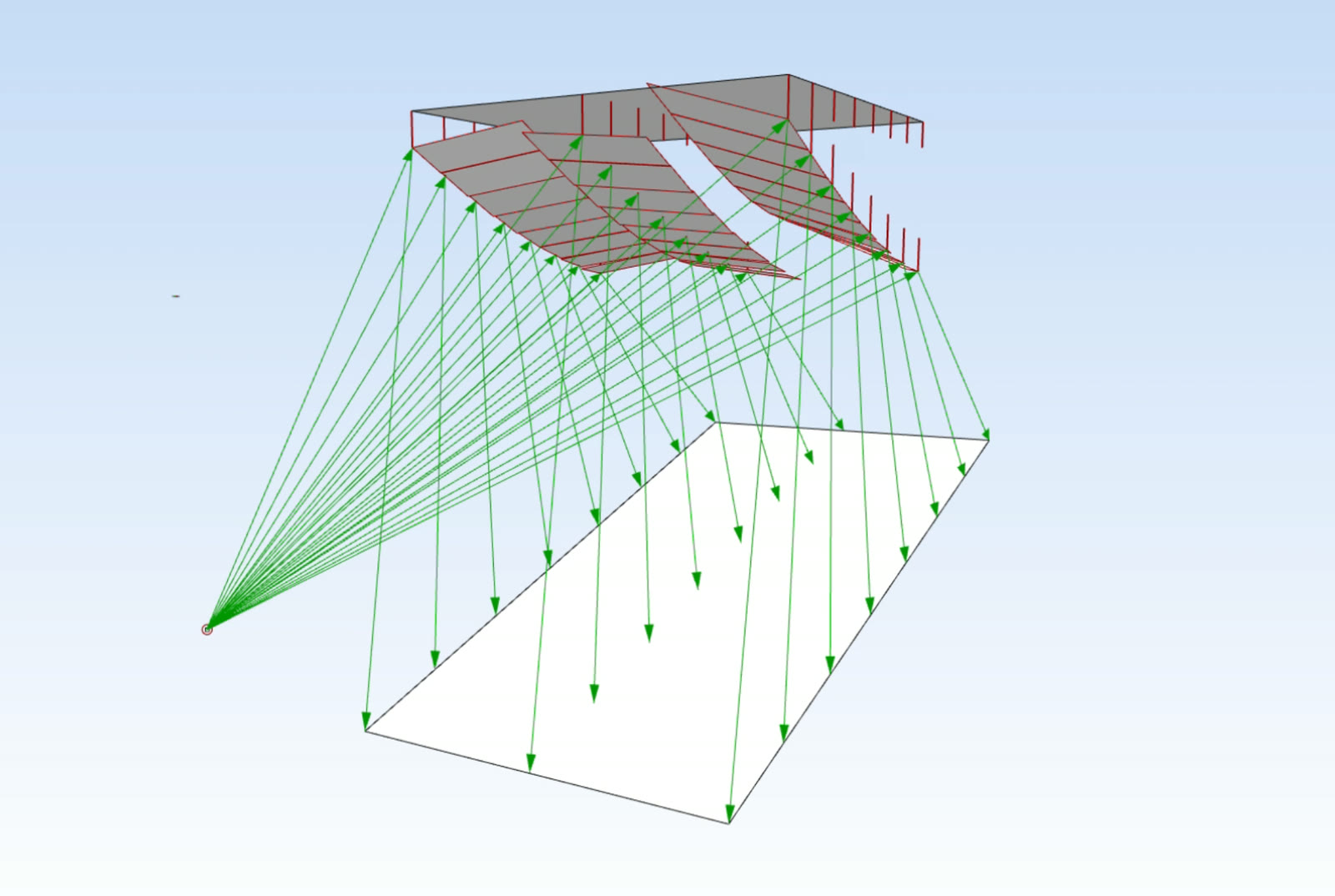
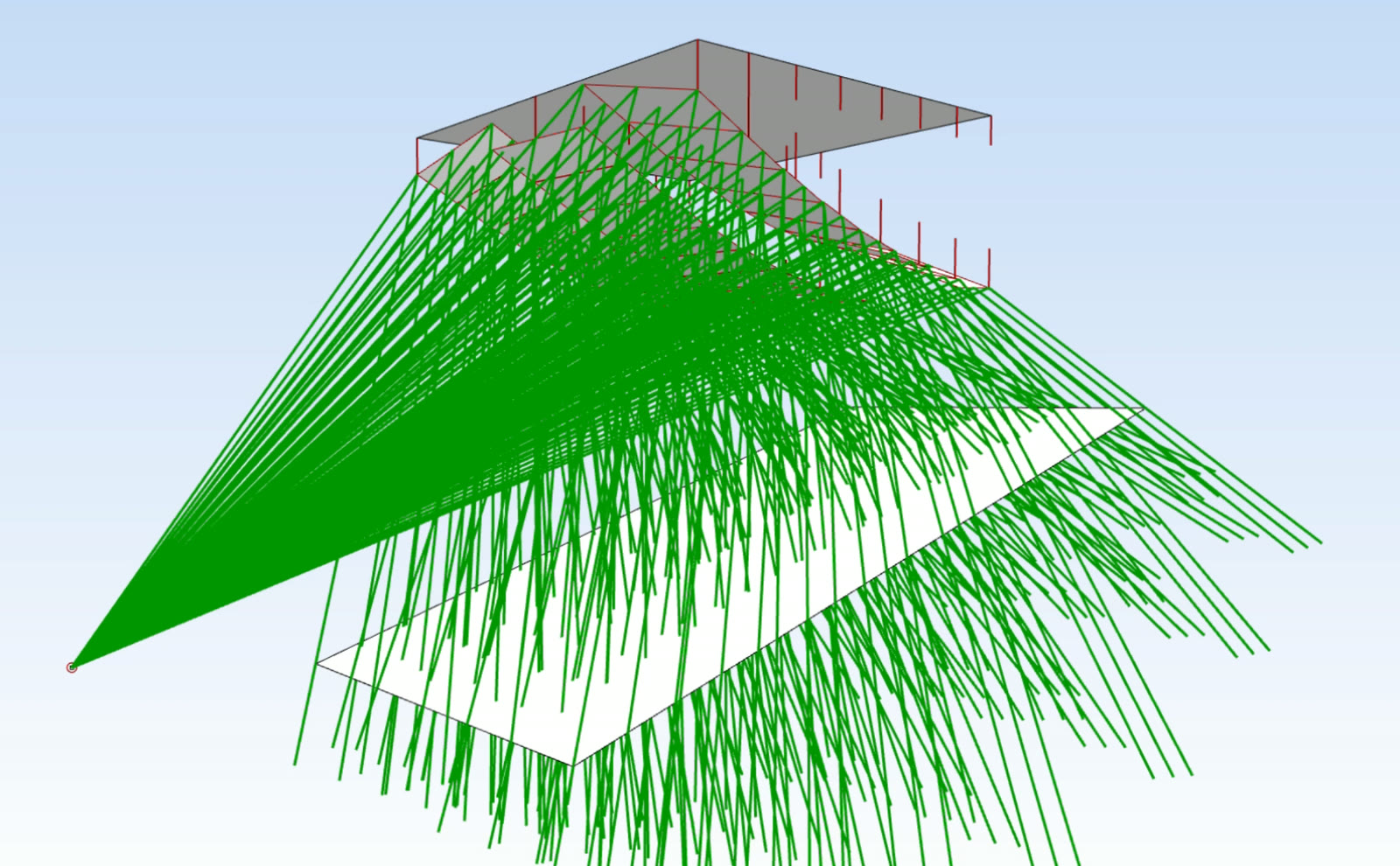
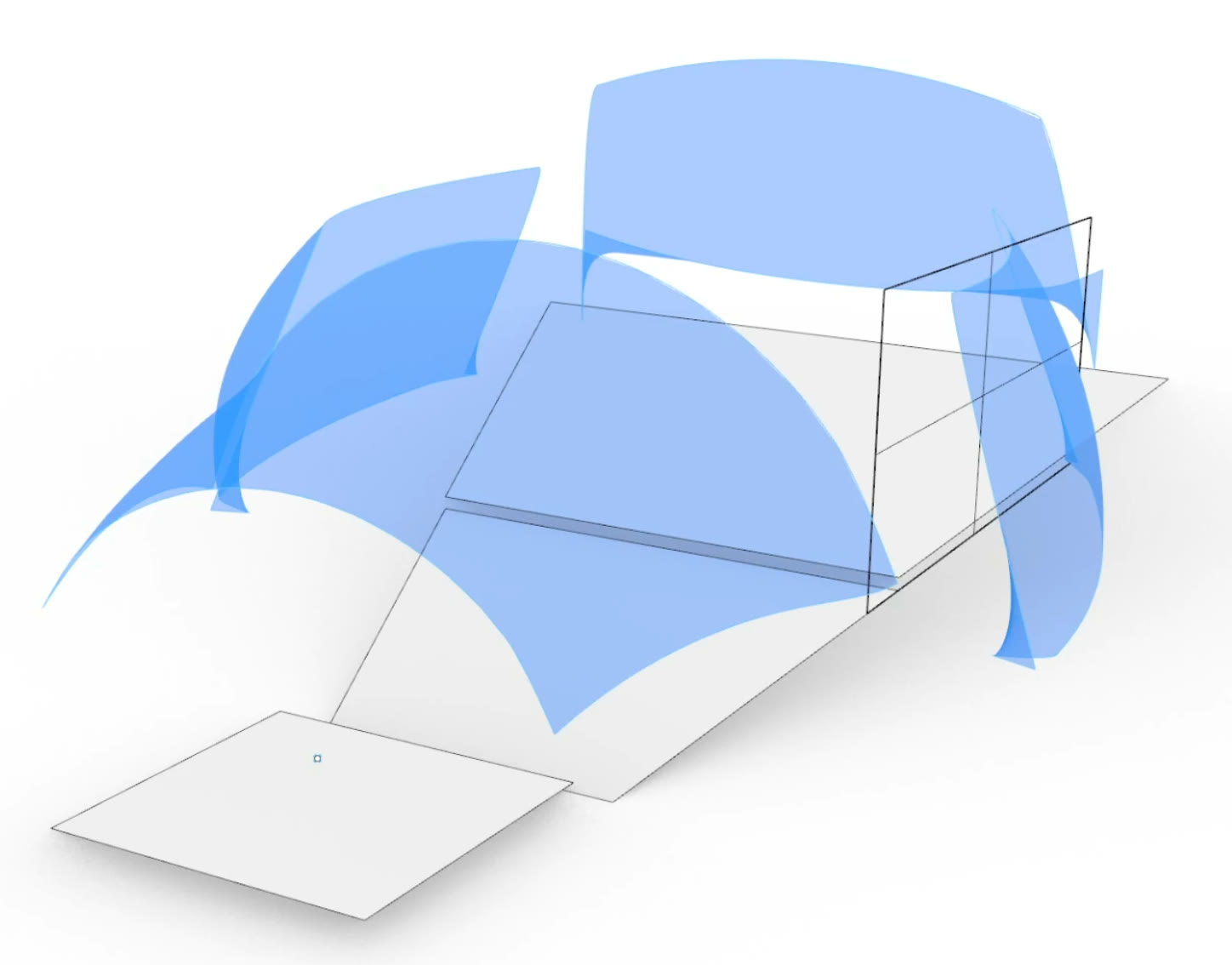
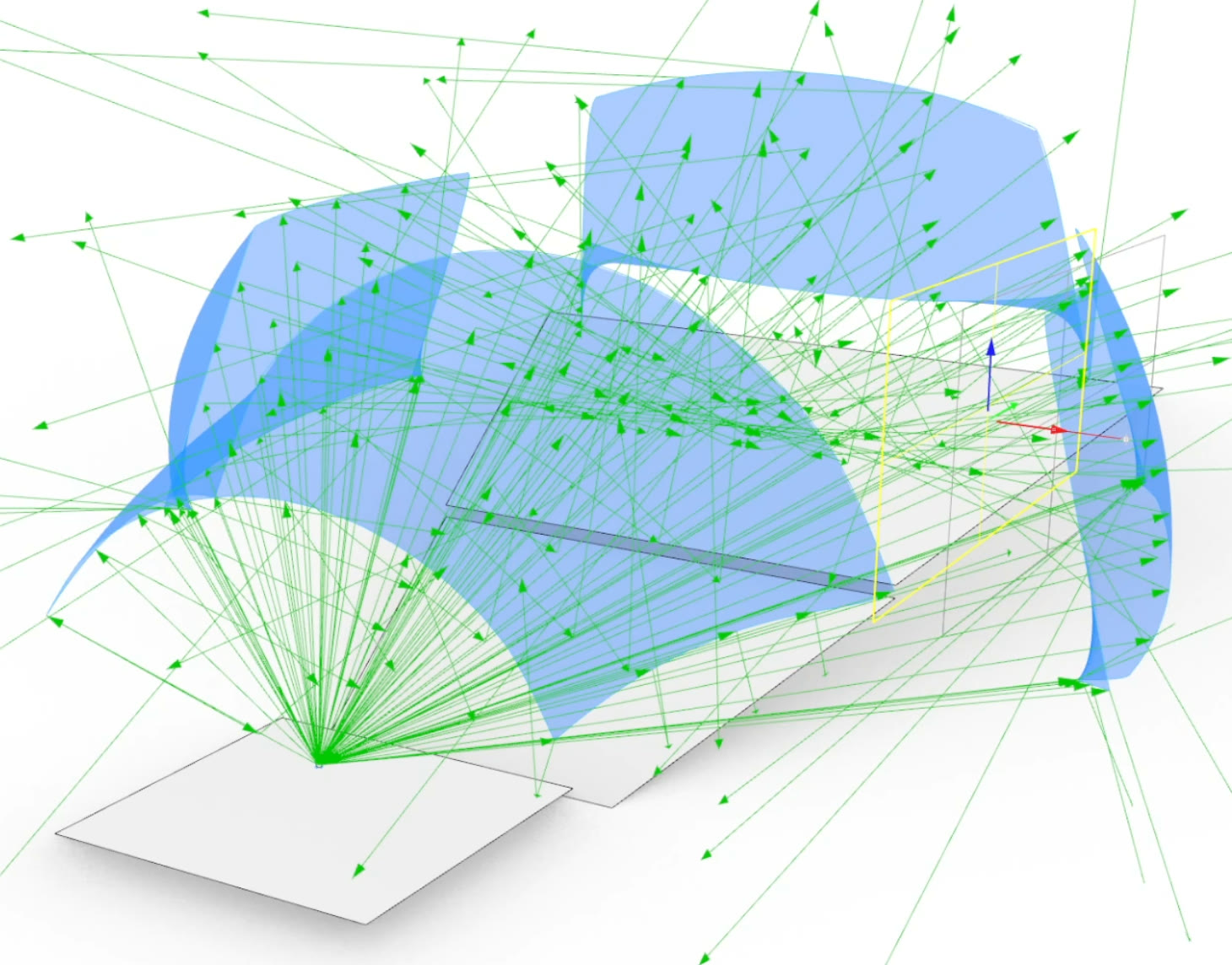
The reflection diagrams below were not added as visualization after the fact. They are the working data the script uses to position panels and shape surfaces, drawn directly in the viewport. The progression moves from a sparse panel array, to a densified array behaving as a continuous surface, to a fully resolved spatial form.
What the work demonstrated.
Three results stand out. First, that the mathematics of specular reflection are tractable enough to drive form directly inside a design environment, with no external simulation step required. Second, that the same logic scales cleanly from one panel to a continuous surface, which means it scales from interior detail to room massing without changing tools. Third, that the surfaces this process produces have a quality of their own. They are not arbitrary parametric gestures. They are shaped by something physical.
The framework also generalizes. Acoustics was the test case, but the underlying pattern (encode an environmental control system as geometry, expose it as a live parameter set, let it shape the design) applies equally to daylighting, solar gain, thermal massing, and air movement. The second semester of independent study, summarized below, carried the same way of working into a different problem: kinetic architecture.
Kinetic continuation of the LIA sculpture.
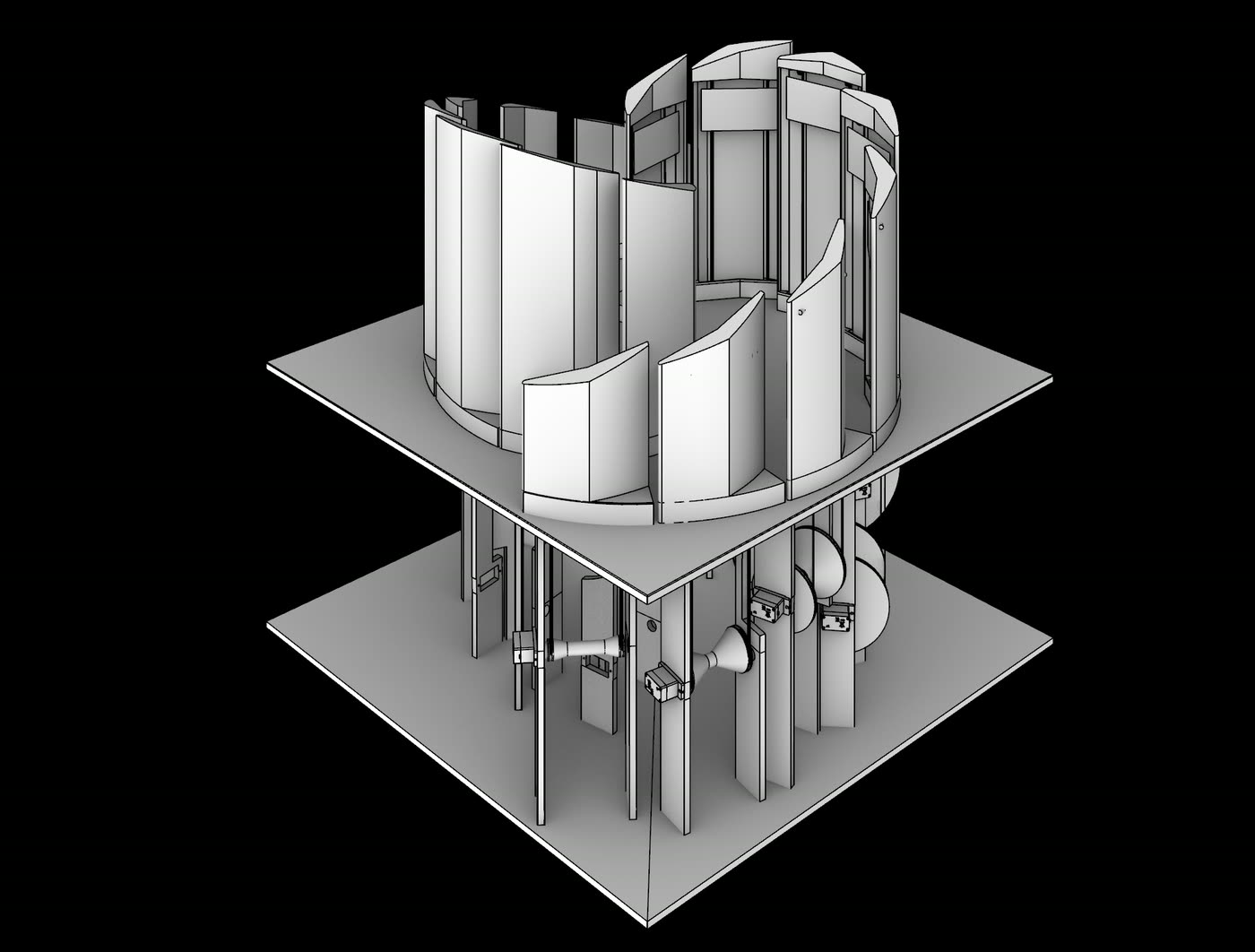
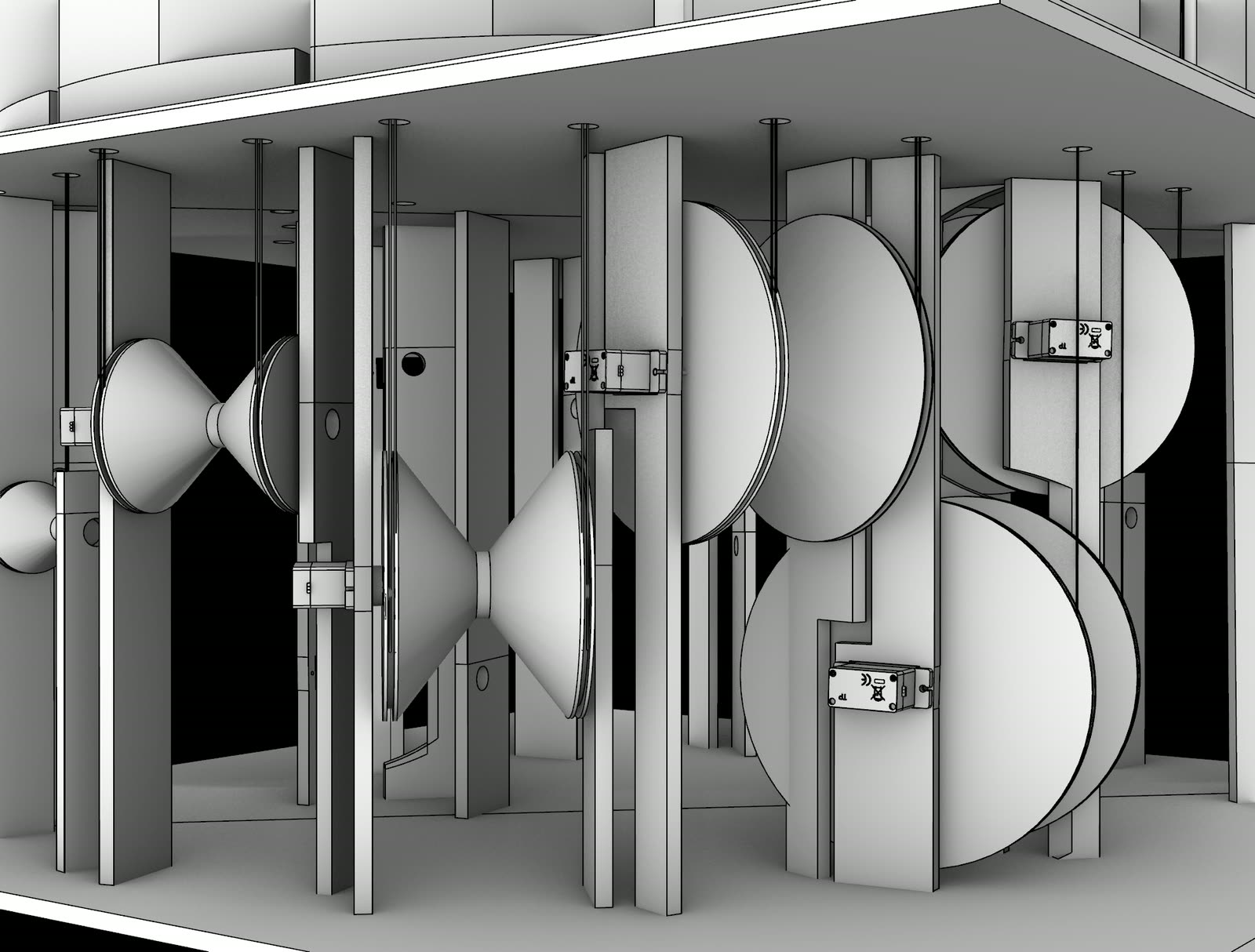
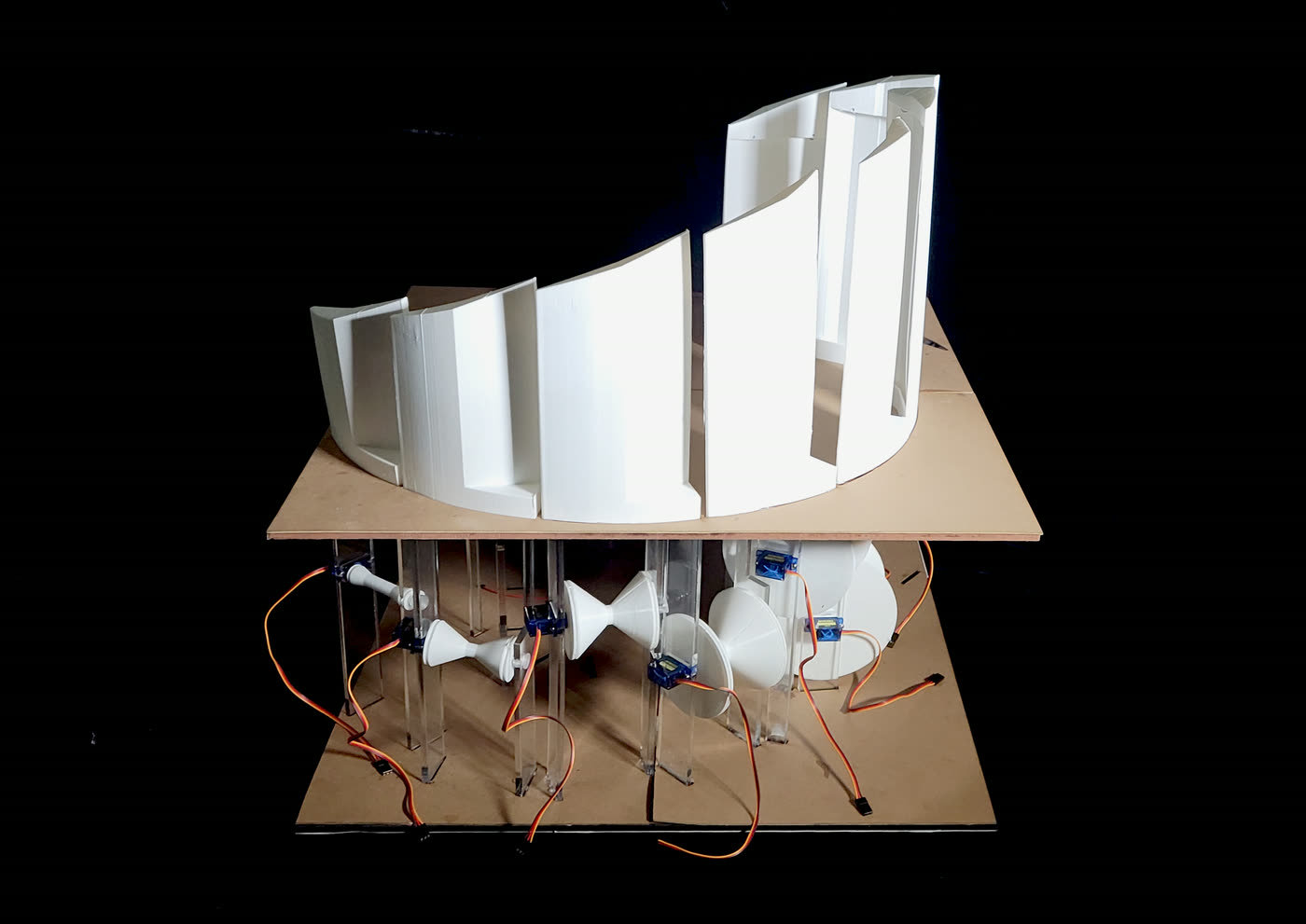
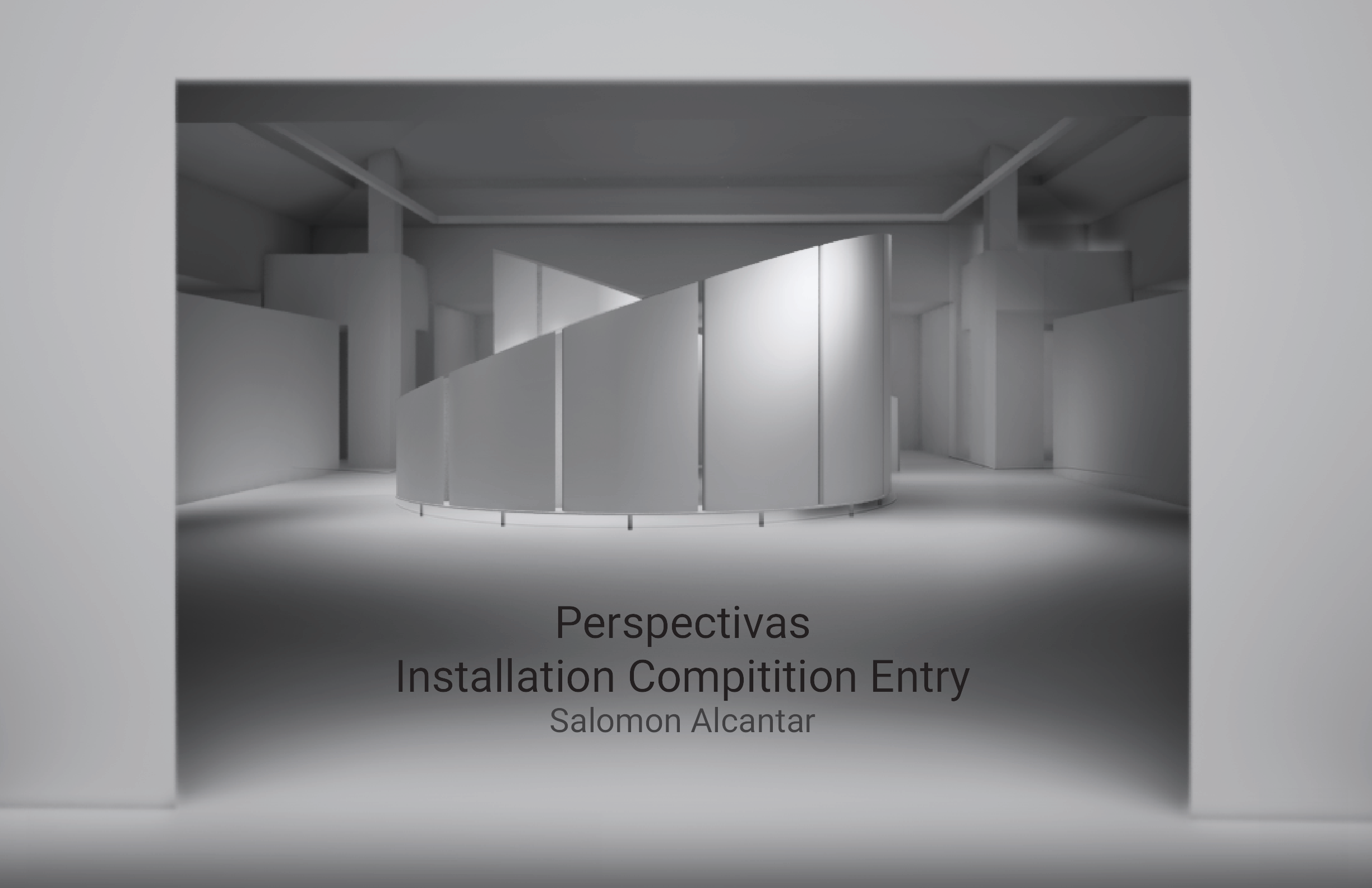
The second semester of independent study built directly off my LIA Award submission — an architectural lighting sculpture concept that explored how a wall surface could open, reorient, and reveal projects to the viewer. The competition piece stayed at the level of a static proposal. This study took the same sculptural concept and investigated what it would mean to make it actually move.
Work proceeded along two parallel tracks: a parametric Rhino model that explored the sculpture’s articulation digitally, and a physical mock-up that tested the mechanics with real servos. I used early-generation AI tooling to help generate the custom code — both the Grasshopper scripting that drove the digital model and the Arduino firmware that let the physical model run on its own. Documentation is intentionally lean here; the work was kept exploratory rather than presentational.
Read the full paper.
The full research write-up is available as a downloadable PDF. It documents the motivation, method, tooling, and outcomes of the study in greater depth.
Spatializing Sound / Research Paper →Explore more work from the portfolio.
Back to Work →